
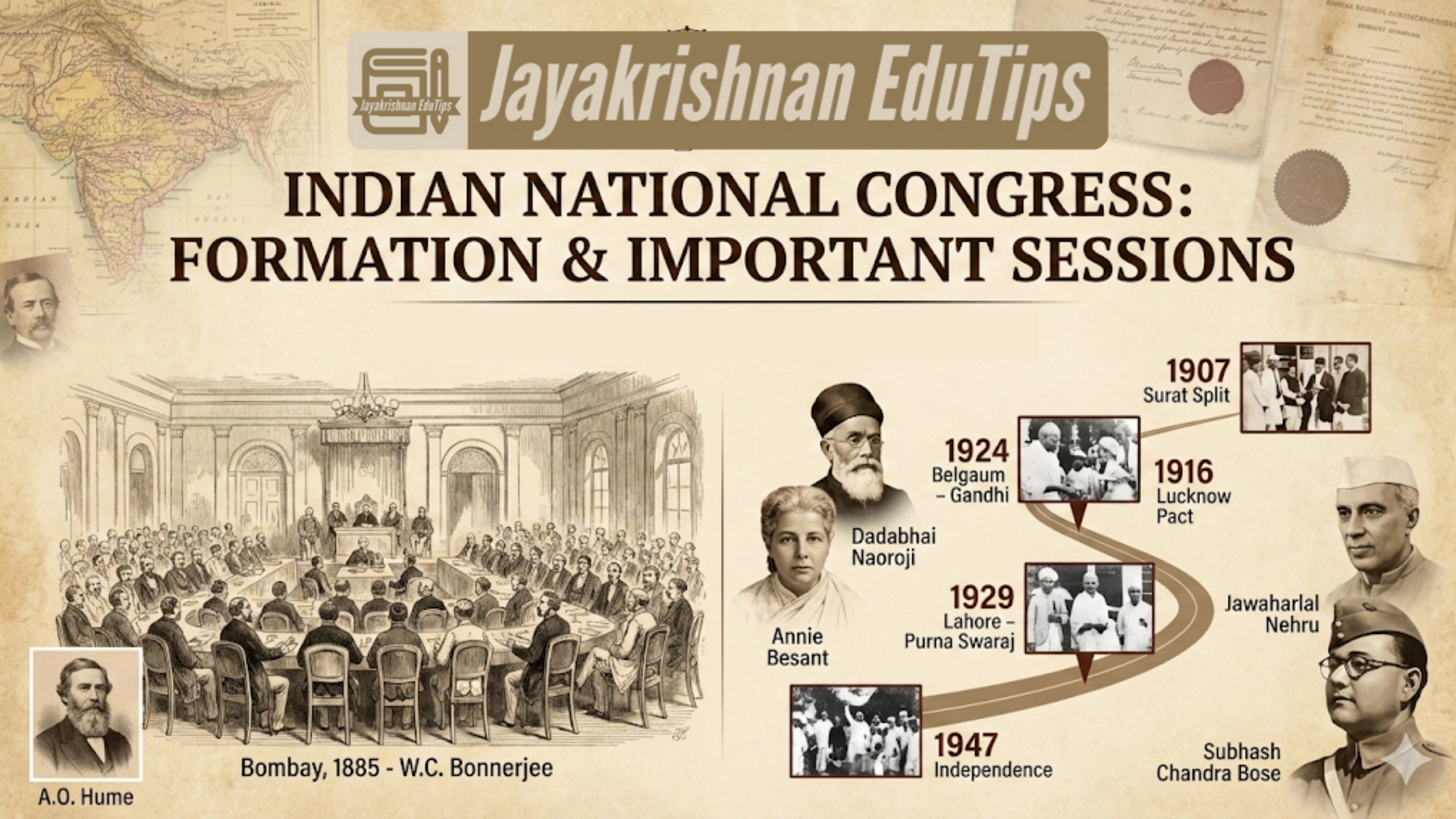
Formation of the Indian National Congress (1885)
1. Key Facts of Establishment
- Founder: Allan Octavian Hume (A.O. Hume), a retired British Civil Servant.
- Date of Formation: 28 December 1885.
- First Session Venue: Gokuldas Tejpal Sanskrit College, Bombay (Mumbai).
- Note: The venue was originally planned to be Poona (Pune), but it was shifted to Bombay due to a Cholera outbreak in Poona.
- First President: Womesh Chandra Bonnerjee (W.C. Bonnerjee).
- Total Delegates: 72 delegates attended the first session (mostly lawyers, journalists, and educated elite).
- Viceroy at the time: Lord Dufferin (1884–1888).
- Famous Comment: Lord Dufferin later ridiculed Congress as representing only a "microscopic minority" of the people.
2. Theories Behind Formation
There are two major historical theories regarding why the INC was formed, often asked in exams:
- Safety Valve Theory:
- Concept: It suggests that A.O. Hume formed the Congress with the blessing of Viceroy Lord Dufferin to provide a peaceful platform (a "safety valve") for Indians to vent their political discontent, thereby preventing another violent revolt like the Revolt of 1857.
- Propagated by: Radical leaders like Lala Lajpat Rai.
- Lightning Conductor Theory:
- Concept: Modern historians and moderate leaders believed that Indian nationalists used A.O. Hume as a "lightning conductor." By having a British officer as the founder, they could avoid immediate suppression and suspicion by the British government.
- Supporter: Gopal Krishna Gokhale.
Important Sessions of INC (1885–1947)
This table covers the most frequently asked sessions exams. Pay special attention to the President and the Significance.
|
Year |
Place |
President |
Significance / Key Outcome |
|
1885 |
Bombay |
W.C. Bonnerjee |
1st Session. Formation of INC. attended by 72 delegates. |
|
1886 |
Calcutta |
Dadabhai Naoroji |
Merger of National Conference with INC. |
|
1887 |
Madras |
Badruddin Tyabji |
First Muslim President of INC. |
|
1888 |
Allahabad |
George Yule |
First English (Non-Indian) President of INC. |
|
1896 |
Calcutta |
Rahimtullah M. Sayani |
National Song 'Vande Mataram' was sung for the first time (composed by Bankim Chandra Chatterjee). |
|
1905 |
Benaras |
G.K. Gokhale |
Protest against Partition of Bengal; formal proclamation of Swadeshi Movement. |
|
1906 |
Calcutta |
Dadabhai Naoroji |
The word 'Swaraj' (Self-rule) was mentioned/demanded for the first time. |
|
1907 |
Surat |
Rash Behari Ghosh |
Surat Split: Congress divided into Moderates and Extremists. Session was suspended. |
|
1909 |
Lahore |
Madan Mohan Malaviya |
Disapproval of separate electorates given in Indian Councils Act 1909 (Morley-Minto Reforms). |
|
1911 |
Calcutta |
B.N. Dhar |
National Anthem 'Jana Gana Mana' was sung for the first time. |
|
1916 |
Lucknow |
A.C. Majumdar |
Lucknow Pact: Reunion of Moderates & Extremists; Pact between Congress and Muslim League. |
|
1917 |
Calcutta |
Annie Besant |
First Woman President of INC. |
|
1919 |
Amritsar |
Motilal Nehru |
Strong condemnation of the Jallianwala Bagh Massacre. |
|
1920 |
Nagpur |
C. Vijayaraghavachariar |
Non-Cooperation Resolution was passed. (Special session in Calcutta was led by Lala Lajpat Rai). |
|
1923 |
Delhi (Special) |
Abul Kalam Azad |
Youngest President of INC (at age 35). |
|
1924 |
Belgaum |
Mahatma Gandhi |
The only session presided over by Mahatma Gandhi. |
|
1925 |
Kanpur |
Sarojini Naidu |
First Indian Woman President of INC. |
|
1929 |
Lahore |
Jawaharlal Nehru |
Resolution for 'Purna Swaraj' (Complete Independence). 26 Jan 1930 was observed as the first Independence Day. |
|
1931 |
Karachi |
Vallabhbhai Patel |
Resolution on Fundamental Rights and National Economic Programme. Endorsed Gandhi-Irwin Pact. |
|
1937 |
Faizpur |
Jawaharlal Nehru |
First session held in a village. |
|
1938 |
Haripura |
Subhash Chandra Bose |
National Planning Committee set up under J.L. Nehru. |
|
1939 |
Tripuri |
Subhash Chandra Bose |
Bose won but resigned due to differences with Gandhi; Rajendra Prasad took over. Bose formed Forward Bloc. |
|
1940-46 |
Ramgarh |
Abul Kalam Azad |
Longest-serving President before independence (no sessions held due to WWII and Quit India Movement). |
|
1946 |
Meerut |
J.B. Kripalani |
President at the time of Independence (Aug 15, 1947). |
|
1948 |
Jaipur |
Pattabhi Sitaramayya |
First session after Independence. |
"Super 10" Key Facts for Exams
- Who was the President when India got Independence?
J.B. Kripalani (Meerut Session, 1946).
- Who was the First Woman President?
Annie Besant (1917).
- Who was the First Indian Woman President?
Sarojini Naidu (1925).
- Who was the First Muslim President?
Badruddin Tyabji (1887).
- Who was the First English President?
George Yule (1888).
- In which session was 'Vande Mataram' first sung?
1896, Calcutta.
- In which session was 'Jana Gana Mana' first sung?
1911, Calcutta.
- Which is the only session presided by Mahatma Gandhi?
1924, Belgaum (Karnataka).
- Who was the President during the Surat Split (1907)?
Rash Behari Ghosh (Do not confuse with revolutionary Rash Behari Bose).
- Who hold the record for being President for the longest continuous term before 1947?
Maulana Abul Kalam Azad (1940–1946).
Important Resolutions & Movements Associated with Sessions
- Swadeshi Movement: Benaras Session (1905).
- Swaraj (Self Rule): Calcutta Session (1906).
- Non-Cooperation Movement: Nagpur Session (1920).
- Purna Swaraj (Complete Independence): Lahore Session (1929).
- Fundamental Rights: Karachi Session (1931).
ഇന്ത്യൻ നാഷണൽ കോൺഗ്രസിൻ്റെ രൂപീകരണം (1885)
1. രൂപീകരണവുമായി ബന്ധപ്പെട്ട പ്രധാന വിവരങ്ങൾ
- സ്ഥാപകൻ: എ.ഒ. ഹ്യൂം (Allan Octavian Hume) - വിരമിച്ച ബ്രിട്ടീഷ് സിവിൽ സർവീസ് ഉദ്യോഗസ്ഥൻ.
- രൂപീകരിച്ച തീയതി: 1885 ഡിസംബർ 28.
- ആദ്യ സമ്മേളനം നടന്ന സ്ഥലം: ഗോകുൽദാസ് തേജ്പാൽ സംസ്കൃത കോളേജ്, ബോംബെ (മുംബൈ).
- ശ്രദ്ധിക്കുക: പൂനെയിൽ വച്ച് നടത്താനാണ് ആദ്യം തീരുമാനിച്ചിരുന്നതെങ്കിലും അവിടെ പ്ലേഗ് (കോളറ) പടർന്നുപിടിച്ചതിനാൽ വേദി ബോംബെയിലേക്ക് മാറ്റുകയായിരുന്നു.
- ആദ്യ പ്രസിഡൻ്റ് (അധ്യക്ഷൻ): ഡബ്ല്യു.സി. ബാനർജി (Womesh Chandra Bonnerjee).
- പങ്കെടുത്ത പ്രതിനിധികൾ: 72 പേർ (ഭൂരിഭാഗവും അഭിഭാഷകരും മാധ്യമപ്രവർത്തകരും ആയിരുന്നു).
- അന്നത്തെ വൈസ്രോയി: ഡഫറിൻ പ്രഭു (Lord Dufferin - 1884–1888).
- പ്രശസ്തമായ കമന്റ്: ജനങ്ങളുടെ ഒരു "ചെറിയ ന്യൂനപക്ഷത്തെ" (Microscopic Minority) മാത്രമാണ് കോൺഗ്രസ് പ്രതിനിധീകരിക്കുന്നത് എന്ന് ഡഫറിൻ പ്രഭു പിന്നീട് പരിഹസിച്ചു.
2. രൂപീകരണത്തിന് പിന്നിലെ സിദ്ധാന്തങ്ങൾ
ചരിത്രപരമായി കോൺഗ്രസിൻ്റെ രൂപീകരണത്തിന് പിന്നിൽ രണ്ട് പ്രധാന സിദ്ധാന്തങ്ങളുണ്ട്:
- സേഫ്റ്റി വാൽവ് സിദ്ധാന്തം (Safety Valve Theory):
- ബ്രിട്ടീഷ് ഭരണത്തിനെതിരെ ഇന്ത്യക്കാരുടെ ഇടയിലുള്ള അമർഷം ലഘൂകരിക്കാനും, 1857-ലേത് പോലുള്ള മറ്റൊരു വലിയ പ്രക്ഷോഭം ഒഴിവാക്കാനും വൈസ്രോയി ഡഫറിൻ പ്രഭുവിന്റെ അറിവോടുകൂടി എ.ഒ. ഹ്യൂം ഉണ്ടാക്കിയ ഒരു സംഘടനയാണ് കോൺഗ്രസ് എന്നാണ് ഈ സിദ്ധാന്തം പറയുന്നത്.
- ഈ വാദം ഉന്നയിച്ച പ്രധാന നേതാവ്: ലാലാ ലജ്പത് റായ്.
- ലൈറ്റ്നിംഗ് കണ്ടക്ടർ സിദ്ധാന്തം (Lightning Conductor Theory):
- ബ്രിട്ടീഷ് സർക്കാർ തുടക്കത്തിൽ തന്നെ ഈ പ്രസ്ഥാനത്തെ അടിച്ചമർത്താതിരിക്കാൻ, ഒരു ബ്രിട്ടീഷ് ഉദ്യോഗസ്ഥനെ (എ.ഒ. ഹ്യൂം) മുൻനിർത്തി ഇന്ത്യൻ നേതാക്കൾ കോൺഗ്രസ് രൂപീകരിച്ചു എന്നാണ് ഈ സിദ്ധാന്തം പറയുന്നത്. മിന്നലിൽ നിന്ന് രക്ഷനേടാൻ കെട്ടിടങ്ങളിൽ 'ലൈറ്റ്നിംഗ് കണ്ടക്ടർ' ഉപയോഗിക്കുന്നത് പോലെയാണിത്.
- ഈ വാദം ഉന്നയിച്ച നേതാവ്: ഗോപാല കൃഷ്ണ ഗോഖലെ.
കോൺഗ്രസിന്റെ പ്രധാന സമ്മേളനങ്ങൾ (1885–1947)
പരീക്ഷകളിൽ പതിവായി ചോദിക്കുന്ന പ്രധാന സമ്മേളനങ്ങൾ, സ്ഥലം, അധ്യക്ഷൻ, പ്രത്യേകതകൾ എന്നിവ താഴെ നൽകുന്നു:
|
വർഷം |
സ്ഥലം |
പ്രസിഡൻ്റ് (അധ്യക്ഷൻ) |
പ്രത്യേകത / പ്രാധാന്യം |
|
1885 |
ബോംബെ |
ഡബ്ല്യു.സി. ബാനർജി |
ആദ്യ സമ്മേളനം. 72 പ്രതിനിധികൾ പങ്കെടുത്തു. |
|
1886 |
കൊൽക്കത്ത |
ദാദാഭായ് നവറോജി |
നാഷണൽ കോൺഫറൻസ് INC-യിൽ ലയിച്ചു. |
|
1887 |
മദ്രാസ് |
ബദറുദ്ദീൻ ത്യാബ്ജി |
ആദ്യത്തെ മുസ്ലിം പ്രസിഡൻ്റ്. |
|
1888 |
അലഹബാദ് |
ജോർജ്ജ് യൂൾ |
ആദ്യത്തെ വിദേശി (ഇംഗ്ലീഷുകാരൻ) പ്രസിഡൻ്റ്. |
|
1896 |
കൊൽക്കത്ത |
റഹിംതുള്ള എം. സയാനി |
'വന്ദേമാതരം' ആദ്യമായി ആലപിച്ചു (രചയിതാവ്: ബങ്കിം ചന്ദ്ര ചാറ്റർജി). |
|
1905 |
ബനാറസ് |
ജി.കെ. ഗോഖലെ |
ബംഗാൾ വിഭജനത്തിനെതിരെ പ്രതിഷേധം; സ്വദേശി പ്രസ്ഥാനത്തിന് ഔദ്യോഗിക അംഗീകാരം. |
|
1906 |
കൊൽക്കത്ത |
ദാദാഭായ് നവറോജി |
'സ്വരാജ്' (Swaraj) എന്ന പദം ആദ്യമായി ഉപയോഗിച്ചു. |
|
1907 |
സൂററ്റ് |
റാഷ് ബിഹാരി ഘോഷ് |
സൂററ്റ് പിളർപ്പ്: കോൺഗ്രസ് മിതവാദികൾ, തീവ്രവാദികൾ എന്നിങ്ങനെ രണ്ടായി പിളർന്നു. |
|
1909 |
ലാഹോർ |
മദൻ മോഹൻ മാളവ്യ |
1909-ലെ ഇന്ത്യൻ കൗൺസിൽ ആക്ട് (മിന്റോ-മോർലി പരിഷ്കാരം) പ്രകാരമുള്ള പ്രത്യേക നിയോജകമണ്ഡലങ്ങളെ എതിർത്തു. |
|
1911 |
കൊൽക്കത്ത |
ബി.എൻ. ധർ |
ദേശീയ ഗാനം 'ജനഗണമന' ആദ്യമായി ആലപിച്ചു. |
|
1916 |
ലക്നൗ |
എ.സി. മജുംദാർ |
ലക്നൗ ഉടമ്പടി: മിതവാദികളും തീവ്രവാദികളും ഒന്നിച്ചു. കോൺഗ്രസും മുസ്ലിം ലീഗും സഖ്യമുണ്ടാക്കി. |
|
1917 |
കൊൽക്കത്ത |
ആനി ബസന്റ് |
ആദ്യത്തെ വനിതാ പ്രസിഡൻ്റ്. |
|
1919 |
അമൃത്സർ |
മോത്തിലാൽ നെഹ്റു |
ജാലിയൻ വാലാബാഗ് കൂട്ടക്കൊലയെ ശക്തമായി അപലപിച്ചു. |
|
1920 |
നാഗ്പൂർ |
സി. വിജയരാഘവാചാരി |
നിസ്സഹകരണ പ്രസ്ഥാനത്തിന് (Non-Cooperation) അംഗീകാരം നൽകി. |
|
1923 |
ഡൽഹി (പ്രത്യേകം) |
അബുൽ കലാം ആസാദ് |
ഏറ്റവും പ്രായം കുറഞ്ഞ പ്രസിഡൻ്റ് (35 വയസ്സ്). |
|
1924 |
ബെൽഗാം |
മഹാത്മാ ഗാന്ധി |
ഗാന്ധിജി അധ്യക്ഷനായ ഏക സമ്മേളനം. |
|
1925 |
കാൺപൂർ |
സരോജിനി നായിഡു |
ആദ്യത്തെ ഇന്ത്യൻ വനിതാ പ്രസിഡൻ്റ്. |
|
1929 |
ലാഹോർ |
ജവഹർലാൽ നെഹ്റു |
'പൂർണ്ണ സ്വരാജ്' പ്രമേയം പാസാക്കി. 1930 ജനുവരി 26 ആദ്യ സ്വാതന്ത്ര്യദിനമായി ആചരിച്ചു. |
|
1931 |
കറാച്ചി |
സർദാർ പട്ടേൽ |
മൗലിക അവകാശ പ്രമേയം (Fundamental Rights) പാസാക്കി. ഗാന്ധി-ഇർവിൻ ഉടമ്പടിയെ അംഗീകരിച്ചു. |
|
1937 |
ഫൈസ്പൂർ |
ജവഹർലാൽ നെഹ്റു |
ഗ്രാമത്തിൽ വെച്ചു നടന്ന ആദ്യത്തെ സമ്മേളനം. |
|
1938 |
ഹരിപുര |
സുഭാഷ് ചന്ദ്ര ബോസ് |
ദേശീയ പ്ലാനിംഗ് കമ്മിറ്റി (National Planning Committee) രൂപീകരിച്ചു. |
|
1939 |
ത്രിപുരി |
സുഭാഷ് ചന്ദ്ര ബോസ് |
ബോസ് വീണ്ടും തിരഞ്ഞെടുക്കപ്പെട്ടെങ്കിലും ഗാന്ധിജിയുമായുള്ള അഭിപ്രായവ്യത്യാസത്തെ തുടർന്ന് രാജിവച്ചു. രാജേന്ദ്ര പ്രസാദ് പകരക്കാരനായി. ബോസ് ഫോർവേഡ് ബ്ലോക്ക് രൂപീകരിച്ചു. |
|
1940-46 |
രാംഗഡ് |
അബുൽ കലാം ആസാദ് |
സ്വാതന്ത്ര്യത്തിന് മുമ്പ് ഏറ്റവും കൂടുതൽ കാലം തുടർച്ചയായി പ്രസിഡൻ്റ് ആയ വ്യക്തി. |
|
1946 |
മീററ്റ് |
ജെ.ബി. കൃപലാനി |
ഇന്ത്യക്ക് സ്വാതന്ത്ര്യം ലഭിക്കുമ്പോൾ കോൺഗ്രസ് പ്രസിഡൻ്റ് ഇദ്ദേഹമായിരുന്നു. |
പരീക്ഷയ്ക്കുളള "സൂപ്പർ 10" ചോദ്യങ്ങൾ
പരീക്ഷകളിൽ ആവർത്തിച്ചു ചോദിക്കുന്ന വൺ വേർഡ് ചോദ്യങ്ങൾ.
- ഇന്ത്യക്ക് സ്വാതന്ത്ര്യം ലഭിക്കുമ്പോൾ കോൺഗ്രസ് പ്രസിഡൻ്റ് ആരായിരുന്നു?
ജെ.ബി. കൃപലാനി (1946, മീററ്റ് സമ്മേളനം).
- ആദ്യത്തെ വനിതാ പ്രസിഡൻ്റ് ആര്?
ആനി ബസന്റ് (1917).
- ആദ്യത്തെ ഇന്ത്യൻ വനിതാ പ്രസിഡൻ്റ് ആര്?
സരോജിനി നായിഡു (1925).
- ആദ്യത്തെ മുസ്ലിം പ്രസിഡൻ്റ് ആര്?
ബദറുദ്ദീൻ ത്യാബ്ജി (1887).
- ആദ്യത്തെ വിദേശി (ഇംഗ്ലീഷുകാരൻ) പ്രസിഡൻ്റ് ആര്?
ജോർജ്ജ് യൂൾ (1888).
- ഏത് സമ്മേളനത്തിലാണ് 'വന്ദേമാതരം' ആദ്യമായി ആലപിച്ചത്?
1896, കൊൽക്കത്ത.
- ഏത് സമ്മേളനത്തിലാണ് 'ജനഗണമന' ആദ്യമായി ആലപിച്ചത്?
1911, കൊൽക്കത്ത.
- മഹാത്മാ ഗാന്ധി അധ്യക്ഷനായ ഏക സമ്മേളനം ഏതാണ്?
1924, ബെൽഗാം (കർണാടക).
- സൂററ്റ് പിളർപ്പ് (1907) സമയത്ത് ആരായിരുന്നു പ്രസിഡൻ്റ്?
റാഷ് ബിഹാരി ഘോഷ് (വിപ്ലവകാരിയായ റാഷ് ബിഹാരി ബോസുമായി തെറ്റിദ്ധരിക്കരുത്).
- സ്വാതന്ത്ര്യത്തിന് മുമ്പ് ഏറ്റവും കൂടുതൽ കാലം പ്രസിഡൻ്റ് പദവിയിലിരുന്ന വ്യക്തി?
മൗലാനാ അബുൽ കലാം ആസാദ് (1940–1946).
സമ്മേളനങ്ങളുമായി ബന്ധപ്പെട്ട പ്രധാന പ്രമേയങ്ങൾ
- സ്വദേശി പ്രസ്ഥാനം (Swadeshi Movement): ബനാറസ് സമ്മേളനം (1905).
- സ്വരാജ് (Self Rule): കൊൽക്കത്ത സമ്മേളനം (1906).
- നിസ്സഹകരണ പ്രസ്ഥാനം (Non-Cooperation Movement): നാഗ്പൂർ സമ്മേളനം (1920).
- പൂർണ്ണ സ്വരാജ് (Complete Independence): ലാഹോർ സമ്മേളനം (1929).
- മൗലിക അവകാശങ്ങൾ (Fundamental Rights): കറാച്ചി സമ്മേളനം (1931).